A Guide to Greenwich Village Hidden Residential Blocks
July 9, 2026
July 9, 2026
If you picture Greenwich Village as all energy and foot traffic, you are only seeing part of the story. Some of its most appealing addresses feel tucked away, scaled for strolling, and quietly removed from the busiest nearby avenues. If you are exploring the neighborhood, this guide will help you understand where that calmer side shows up and why it lasts. Let’s dive in.
Greenwich Village still reads as village-like because so much of its historic fabric remains in place. Village Preservation notes that the Greenwich Village Historic District was designated in 1969, is the city’s largest historic district, and covers roughly 2,300 buildings from University Place to Washington Street and West 13th Street to St. Luke’s Place.
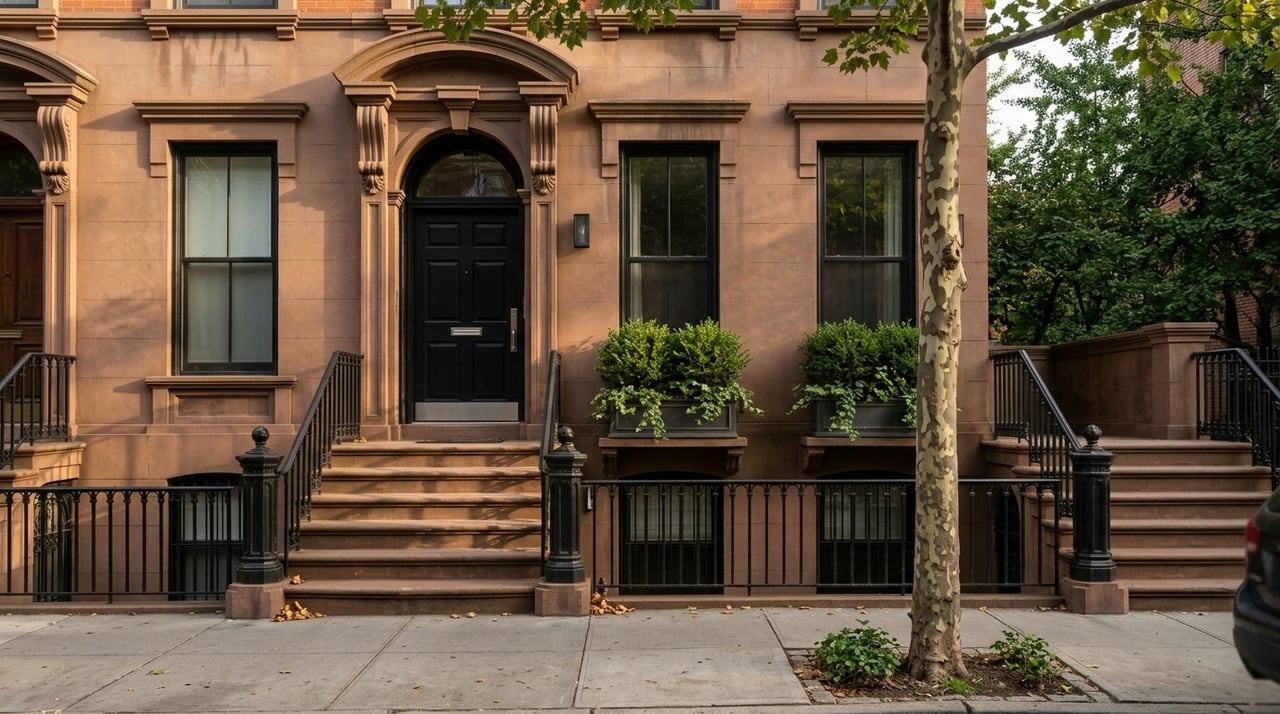
That scale matters when you walk the neighborhood. The historic district report describes early development from roughly 1819 to 1853, when people moved uptown to escape lower Manhattan’s crowding and epidemics. Many of the surviving buildings from that era are low-rise Federal and Greek Revival rowhouses, which helps the area feel compact and residential rather than towering or canyon-like.
The street pattern adds another layer. A New York City planning document points to Greenwich Village as an example of a neighborhood with a pleasurable walking and strolling experience. In real terms, that often means the quietest-feeling spots are on short side streets, bends, courts, and mews rather than on major commercial corridors.
Part of the Village’s calm comes from preservation rules, not just architecture. The Landmarks Preservation Commission states that most exterior changes to front and rear facades in historic districts require review, and that proposed work is evaluated for sensitivity to the district’s scale and character.
For you as a buyer or renter, that can be meaningful. The same protections that may limit certain exterior changes also help preserve the visual consistency of many blocks. Over time, that supports the settled, low-profile street character that draws so many people to this part of Downtown Manhattan.
Washington Mews is one of the clearest examples of a hidden residential lane in Greenwich Village. Village Preservation describes it as a cobblestoned street just north of Washington Square Park, gated at both ends, with buildings that began as horse stables serving nearby townhouses.
What makes it memorable is the sense of separation. The historic district report, as quoted by Village Preservation, describes the Mews as light, airy, charming, and unusually removed from city traffic. Even in a central location, it feels distinct from the surrounding street grid.
Just nearby, Washington Square North adds a more formal residential note. Known as The Row, it is defined by uniform Greek Revival townhouses and deep front yards. Together, these two addresses show how Greenwich Village can feel both central and calm at the same time.
Patchin Place and Milligan Place are among the Village’s most secluded-feeling residential pockets. Village Preservation notes that they sit on a trapezoidal block bounded by Sixth Avenue, Greenwich Avenue, Tenth Street, and Eleventh Street, and that both began as modest mid-19th-century workmen’s cottages.
Their appeal comes from intimacy rather than grandeur. The narrow scale, tucked-away setting, and gated feel create a sense of retreat that is unusual in Manhattan. If you are drawn to blocks that feel hidden in plain sight, these are two of the most distinctive examples.
Grove Court captures another version of Greenwich Village quiet. According to Village Preservation, Grove Street bends east of Hudson Street, creating a deep opening behind 10 and 12 Grove Street where tiny houses sit behind a private gate and triangular courtyard.
Those houses were built from 1852 to 1854 as workingmen’s cottages. The court remains compact today, and Village Preservation notes that many units are smaller than modern buyers may expect. That tradeoff is important to understand early if you are prioritizing charm, privacy, and architectural character.
Nearby Gay Street adds a similar sense of intimacy. It is only one block long, with Federal-style houses on one side, Greek Revival houses on the other, and a crooked alignment that makes the block feel unusually close-scaled and personal.
MacDougal Alley feels quiet for a different reason. NYU’s Grey Art Museum says it is now a private gated road with access by key only, while Village Preservation notes that many of its buildings began as stables before later being converted into studios as artists moved into the area.
That history gives the alley a layered character. It reflects one of the Village’s recurring patterns, where former service lanes became creative and residential enclaves over time. If you appreciate adaptive reuse and hidden architectural stories, this is one of the neighborhood’s most interesting pockets.
St. Luke’s Place offers a more picturesque, polished version of Village calm. Village Preservation describes this one-block stretch of Leroy Street between Seventh Avenue South and Hudson Street as a gentle bend lined with 15 brick Italianate houses, brownstone trim, decorative ironwork fences, and prominent stoops.
A shaded park across the street adds to the experience. The combination of trees, stoops, and an off-grid layout gives the block a settled, low-key rhythm. It is the kind of street that helps explain why Greenwich Village remains so appealing to buyers who want historic character with a quieter residential feel.
These quiet pockets work in part because they connect to meaningful open space. NYU’s Grey Art Museum notes that once Washington Square became a public square, the surrounding streets developed as a popular residential area, and the square still serves as the neighborhood’s central green anchor.
Smaller green spaces matter too. Historic district sources point to Jefferson Market Library and Garden as part of the backdrop near Patchin Place, while the grounds of the Church of St. Luke in the Fields occupy an irregularly shaped block with enough open space and walkways to feel almost like a village center in miniature.
On the neighborhood’s western edge, Hudson River Park offers a different kind of relief. The park’s Greenwich Village section includes an uninterrupted esplanade, lawns for relaxing, scenic overlooks, a dog run, dining, and waterfront destinations including Pier 45, Pier 46, and Pier 51.
If you are considering one of these quieter pockets, the main tradeoff is often scale. Some of the neighborhood’s most appealing addresses are also among its most compact. Grove Court, for example, is specifically noted by Village Preservation as having residences that can feel smaller than many modern buyers expect.
It also helps to define what “quiet” means for your lifestyle. In Greenwich Village, quiet rarely means isolated. More often, it comes from form, with short blocks, bends, gates, courtyards, and landmarked rowhouse streets creating a sense of retreat while keeping you close to parks, transit, and daily conveniences.
That is part of the neighborhood’s enduring value. You are not choosing between connection and calm. In the Village, the best residential pockets often offer both, which is exactly what makes them so special to know.
If you are looking for a home that balances architectural character, privacy, and true block-by-block nuance in Downtown Manhattan, Annie Azzo offers a thoughtful, discreet approach to buying, selling, leasing, and relocation.
Stay up to date on the latest real estate trends.
If you’re ready to unlock the finest New York has to offer, Annie is the key. Her in-depth market knowledge and an unwavering commitment to client satisfaction make her a trusted advisor for both buyers and sellers looking to indulge in the complexities of New York City's real estate landscape.