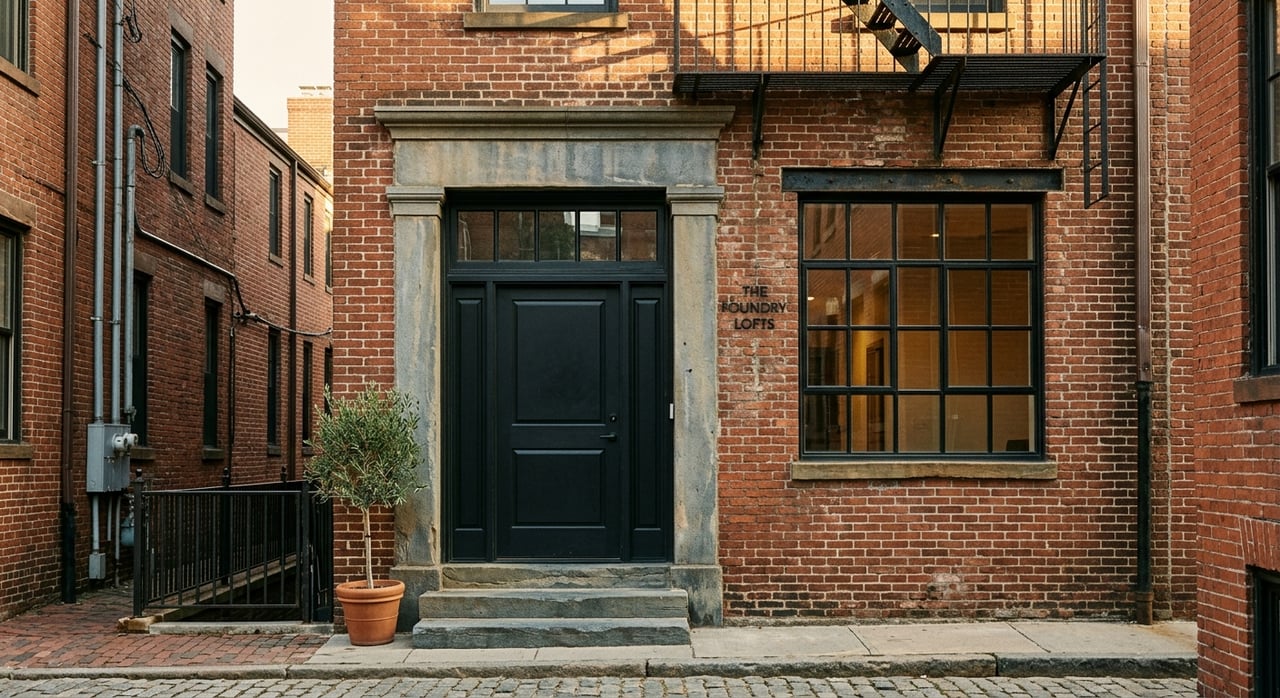
East Village vs Lower East Side for Creative Living
May 28, 2026
May 28, 2026
If you are deciding between the East Village and the Lower East Side, you are really choosing between two different versions of downtown creative life. Both neighborhoods have deep cultural identity, older housing stock, and strong access to the rest of Manhattan, but they feel different once you walk the blocks at different times of day. If you want a clearer read on which one may suit your lifestyle, pace, and housing priorities, this guide will help you sort through it. Let’s dive in.
At a high level, the East Village feels like the more classic arts-and-counterculture address, while the Lower East Side feels more nightlife-forward and in motion. That distinction comes through in neighborhood character, housing mix, green space, and the kind of daily rhythm you can expect.
For many buyers, this is less about which neighborhood is "better" and more about which one fits the way you actually live. If you want creative energy with a bit more daytime ease, the East Village may stand out. If you want a busier, later, more 24/7 atmosphere, the Lower East Side may feel like a better match.
The East Village has long been tied to punk, counterculture, and downtown arts history. Today, it still carries that identity, with Tompkins Square Park, St. Mark’s Place, music venues, cocktail bars, community gardens, and a visible older-street texture that gives the neighborhood a layered feel.
During the day, the East Village often reads as more residential than people expect. StreetEasy notes the neighborhood’s tree-lined blocks, pocket parks, and proximity to NYU and Cooper Union, which helps explain its mix of students, longtime residents, and creative professionals.
That combination gives the East Village a distinct tone. It is lively, but not always at full volume. For buyers who want classic downtown character with some room to exhale, that balance can be appealing.
The Lower East Side is more openly driven by nightlife and after-dark activity. StreetEasy describes it as a major nightlife destination, with bars, clubs, galleries, late-night food, and storefront culture that keep the area active well into the night.
Weekend crowds and later last calls are part of the neighborhood’s identity. The city’s Lower East Side Late-Night Quality of Life Improvement Plan for the Ludlow and Orchard corridor also reflects just how concentrated that activity is in parts of the neighborhood.
For some buyers, that energy is the point. The Lower East Side can feel more intense, louder, and more changeable than the East Village, which may suit people who want constant motion and a more visibly evolving streetscape.
Housing in the East Village is generally older and more constrained. StreetEasy describes the neighborhood as mostly prewar, with many walk-up buildings and relatively few new condominiums.
That usually means smaller apartments, older layouts, and homes that may need updating even when prices remain strong. If you are drawn to historic texture, intimate scale, and low-rise streets, that housing stock can be part of the appeal.
Historic preservation also plays a meaningful role here. The Landmarks Preservation Commission designated the shared East Village/Lower East Side Historic District in 2012, covering about 325 buildings, and designated properties require approval for alterations, demolition, reconstruction, or new construction.
The Lower East Side also includes older tenement-style and walk-up housing, but the product mix is more varied. StreetEasy notes that the neighborhood includes both traditional older buildings and larger-scale redevelopment or newer construction.
In practical terms, that can give buyers more variety in what they are shopping for. You may see classic smaller homes alongside more contemporary inventory, which makes the Lower East Side feel less uniform than the East Village.
If your search includes boutique new construction or a more mixed building landscape, the Lower East Side may offer a broader range. If you want a neighborhood where the low-rise historic fabric feels more dominant, the East Village may feel more consistent.
On StreetEasy’s neighborhood pages, the median sale price is listed at $920K in the East Village and $913K in the Lower East Side. Median base rents are listed at $4,650 in the East Village and $4,500 in the Lower East Side.
StreetEasy’s 2026 watch-list article shows different numbers because it tracks a different series. In that view, median asking price was $1.199M in the East Village, down 6.3% year over year, and $1.299M in the Lower East Side, unchanged year over year. Median asking rent was $4,650 in the East Village, up 13.4% year over year, and $4,500 in the Lower East Side, up 7.3% year over year.
The key is to read those figures directionally rather than as a perfect side-by-side ranking. Both neighborhoods are expensive by most standards, and both remain active downtown markets.
Liquidity looks similar as well. StreetEasy currently shows 52 days on market for sales in both neighborhoods, suggesting that neither area is moving notably slower than the other.
For buyers who care about day-to-day living, the East Village has an edge in neighborhood-scale greenery. StreetEasy points to tree-lined streets and fairly common community gardens, with Tompkins Square Park serving as a major anchor.
The Lower East Side is less known for green blocks and more known for active streets. StreetEasy notes that it lacks green space compared with the East Village, though waterfront access and park conditions are being improved through the East Side Coastal Resiliency project.
This is one of the biggest quality-of-life distinctions between the two areas. The East Village tends to offer a softer daytime street experience, while the Lower East Side leans harder into noise, nightlife, and movement.
Both neighborhoods offer useful subway access, but your exact block matters more than the neighborhood label. If you commute often, the real question is which station cluster is closest to the home you are considering.
In the East Village, access is strongest along the western and northern edges. According to the city’s 324 East 5th Street site overview, the area is about four blocks from the 2nd Avenue station on the F line, about half a mile from Bleecker Street and Astor Place, and about half a mile from Broadway-Lafayette, with nearby M8, M15, and M14A-SBS bus service.
In the Lower East Side, transit is especially strong around the F, J, M, and Z corridor. The MTA lists Delancey Street-Essex Street on the J, M, and Z, East Broadway on the F, and Broadway-Lafayette on the B, D, M, and 6 as nearby options that shape day-to-day connectivity.
For many buyers, this means the better commute is often the apartment nearest the right station, not simply the apartment in the right neighborhood name.
If you care about where a neighborhood is headed, the East Village and Lower East Side are not evolving in exactly the same way. In the East Village, near-term change appears more incremental.
A clear example is the city’s 324 East 5th Street affordable housing proposal on a city-owned parking lot, which points to smaller-scale infill rather than major tower growth. Combined with landmark protections, that suggests a neighborhood where the built environment may remain relatively consistent.
On the Lower East Side side of the equation, change appears more tied to public realm and resiliency work. NYC Planning’s Resilient Neighborhoods work in the broader corridor focuses on retrofitting multifamily buildings to better withstand future flooding while preserving affordable housing, and the East Side Coastal Resiliency project is creating a 2.4-mile flood barrier while improving waterfront access from Montgomery Street to East 25th Street.
For buyers, that can translate into a simple takeaway. The East Village may feel more preservation-led and steady, while the Lower East Side may feel more shaped by infrastructure, adaptation, and evolving public space.
For many creative buyers, the East Village feels like the better fit if you want classic downtown texture, historic fabric, and a more balanced day-to-night rhythm. The Lower East Side tends to make more sense if you want the most active nightlife scene, a louder street presence, and a neighborhood shaped by more visible change.
The right decision usually comes down to nuance. Your block, building type, commute path, and tolerance for noise can matter just as much as the neighborhood name on the listing.
If you are comparing downtown neighborhoods and want a more tailored read on fit, inventory, and long-term value, Annie Azzo offers a thoughtful, discreet approach to buying, selling, leasing, and relocation across Downtown Manhattan.
Stay up to date on the latest real estate trends.


If you’re ready to unlock the finest New York has to offer, Annie is the key. Her in-depth market knowledge and an unwavering commitment to client satisfaction make her a trusted advisor for both buyers and sellers looking to indulge in the complexities of New York City's real estate landscape.